Skylight condensation can be confusing for homeowners. A ceiling may look clean and dry one day, then show misting, droplets or water marks around the skylight the next. In properties with skylights on the Central Coast, condensation is often influenced by the region’s mix of coastal humidity, cooler overnight temperatures and changing indoor moisture levels.
Condensation is not always a sign that the skylight is leaking. In many cases, it forms when warm, moisture-filled indoor air meets a colder skylight surface. However, persistent moisture should not be ignored. Over time, condensation can affect plaster, paint, timber, insulation and indoor air quality if the underlying cause is not addressed.
This article explains why condensation forms on skylights, how to tell the difference between condensation and a roof leak, what can make the problem worse and when it may be time to have the skylight inspected by Skydome Hunter Coast.
Why Condensation Forms on Skylights
Condensation forms when warm, humid indoor air comes into contact with a colder surface. Skylights are often affected because they sit high in the ceiling, where warm air naturally rises. When that air reaches the cooler glazing, frame or light shaft, the moisture in the air can turn into droplets.
This is mainly a temperature and humidity issue. The skylight itself may not be faulty, but its design, age, glazing type, insulation and installation can all influence how much condensation appears.
Temperature Difference and Dew Point
Warm air can hold more moisture than cold air. When warm indoor air touches a cold skylight surface, the air cools down. If it cools enough to reach its dew point, the moisture changes from vapour into liquid water.
This is why skylight condensation is often more noticeable:
- early in the morning after a cold night
- during winter or cooler seasonal changes
- after showers, cooking or indoor clothes drying
- when heating is running inside while outdoor temperatures are low
- in rooms with limited ventilation
Older acrylic domes, single-glazed skylights and units without thermal breaks tend to cool down more quickly on the inside surface. Because of this, they can reach the dew point sooner and show more visible misting or beading.
Indoor Humidity and Everyday Moisture
High indoor humidity is one of the biggest contributors to skylight condensation. Moisture from daily activities rises through the home and can collect around the highest points in the ceiling, including skylights and light shafts.
Common moisture sources include:
- hot showers and baths
- cooking without an exhaust fan
- drying clothes indoors
- unflued gas heaters
- poor bathroom, kitchen or laundry ventilation
- large numbers of indoor plants
On the Central Coast, outdoor humidity can already be high, especially in coastal suburbs and during wet or humid weather. This means the air inside the home may need only a small temperature drop before condensation appears on the skylight.
Ventilation, Insulation and Skylight Design
Ventilation plays a major role in how much moisture reaches a skylight. Bathrooms, kitchens and laundries are more likely to experience condensation because steam and warm air rise quickly and settle near the ceiling. If the room does not have effective extraction or airflow, that moisture has nowhere to go.
Insulation around the skylight shaft is also important. If the light well or roof opening is poorly insulated, cold air from the roof space can chill the skylight frame, glazing and surrounding plasterboard. These cold spots attract condensation more readily than warmer ceiling surfaces.
Skylight design also makes a difference. Older single-glazed units, fixed acrylic domes and frames without thermal breaks are more prone to condensation. Modern skylights with improved glazing, better sealing and thermally efficient frames can help keep the internal surface closer to room temperature, reducing the chance of moisture forming.
How to Tell if It Is Condensation or a Leak
Moisture around a skylight is not automatically a roof leak. Condensation and leaks can look similar at first, but they usually have different causes, patterns and timing. Understanding the difference helps avoid unnecessary repairs and ensures the real issue is addressed.
Where the Water Appears
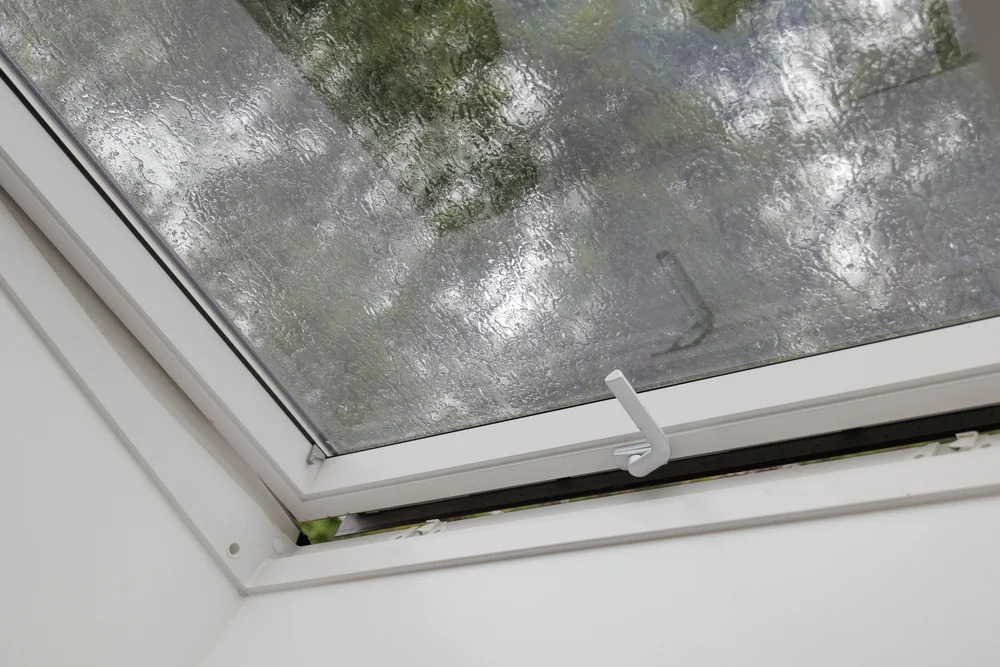
Condensation usually forms on the inside surface of the skylight. It may appear as a light mist, small droplets or beads of water on the glass or acrylic. In heavier cases, it can run down the inside of the glazing and collect on the internal frame, sill or plaster lining.
A leak is more likely to show around the skylight opening or surrounding ceiling. Signs may include damp plasterboard, bubbling paint, yellow or brown staining, soft ceiling lining or water marks spreading away from the skylight shaft.
As a general guide, condensation starts on the internal skylight surface. A leak usually starts from the roof, flashing or surrounding structure.
When the Moisture Appears
Timing is one of the clearest clues.
Condensation is more likely if moisture appears:
- early in the morning after a cool night
- after showers, cooking or indoor clothes drying
- when windows have also fogged up
- during colder weather when the room is warm inside
- when the skylight clears after ventilation improves
A leak is more likely if moisture appears:
- during rain
- shortly after heavy rain or storms
- when wind-driven rain hits the roof
- as a damp patch that grows over time
- even when indoor humidity is low
If the moisture appears only after rain, the flashing, roof sheets, tiles or external seals should be checked. If it appears mostly during cold mornings or after high-humidity activities, condensation is more likely.
What Can Make Skylight Condensation Worse
Light condensation can be normal in some conditions, but certain issues can turn occasional misting into ongoing dripping, staining or mould growth. The problem usually becomes worse when indoor humidity is high, the skylight surface is cold or air movement around the skylight is poor.
High-Humidity Rooms
Skylights in bathrooms, kitchens and laundries are more exposed to moisture than skylights in living rooms or hallways. Steam from showers, boiling water and dryers rises quickly and often gathers around the skylight.
If the room has no exhaust fan, a weak exhaust fan or windows that are rarely opened, humidity can build up. This increases the chance of condensation forming, especially on cooler mornings or during wet weather.
Poor Airflow Around the Skylight
Condensation is more likely to linger when air cannot move freely around the skylight. Deep light wells, tight-fitting blinds, closed diffusers or poorly ventilated shafts can trap warm, moist air against the glazing.
When moisture cannot evaporate, it may keep returning in the same area. Over time, this can lead to mould growth, staining, deterioration of plasterboard and corrosion of metal components.
Inadequate Insulation and Thermal Bridging
A skylight that loses heat quickly will have colder internal surfaces. Single glazing, old acrylic domes, thin metal frames and uninsulated shafts can all increase heat loss.
Thermal bridging can also contribute to the problem. This happens when heat escapes through framing, fixings or poorly insulated sections around the skylight. The result is a colder area where moisture is more likely to condense.
If condensation appears mainly around the edges of the skylight, along the frame or in the corners of the shaft, poor insulation or thermal bridging may be part of the issue.
How to Reduce Skylight Condensation
Reducing skylight condensation usually involves controlling indoor moisture and improving the temperature performance of the skylight area. In many homes, the issue can be reduced without replacing the skylight immediately.
Improve Ventilation
Better ventilation is often the first step. Moisture needs a way to escape before it reaches the skylight and settles on the glass.
Helpful changes include:
- using exhaust fans during and after showers
- running kitchen rangehoods while cooking
- opening windows when weather allows
- keeping bathroom doors open after showering
- avoiding indoor clothes drying where possible
- making sure ceiling vents are not blocked
In bathrooms and laundries, exhaust fans should vent moisture outside the home, not into the roof cavity. Venting humid air into the roof space can create further moisture problems around insulation, framing and skylight openings.
Reduce Cold Surfaces
If the skylight surface stays closer to room temperature, condensation is less likely to form. This may involve improving insulation around the light shaft, sealing cold gaps or upgrading an older skylight.
Possible improvements include:
- insulating the skylight shaft properly
- sealing gaps around the ceiling line
- repairing cracks in the plasterboard lining
- upgrading from single glazing to a more thermally efficient unit
- replacing old acrylic domes where performance has declined
The aim is to reduce cold spots around the skylight so warm, moist air is less likely to condense on one specific surface.
Seal Air Leaks and Maintain the Skylight
Gaps around the skylight shaft or ceiling opening can allow warm, humid air to move into colder spaces. This can increase condensation and may also affect the roof cavity.
Check for visible cracks, loose trims, gaps around the light well or poorly sealed penetrations near the skylight. These areas should be sealed properly so air does not freely escape into cooler parts of the roof structure.
Regular maintenance also helps. Keeping the internal frame clean makes it easier to monitor new moisture, staining or mould. External seals, flashings and roof materials around the skylight should also be checked periodically, especially after storms or roof work.
When to Get a Skylight Checked
Some skylight condensation is seasonal and manageable, especially in humid or coastal areas. However, certain signs point to a more serious issue that should be inspected.
Persistent or Heavy Condensation
Light misting that clears quickly is usually less concerning. An inspection is recommended if:
- water runs down the glass in visible streams
- moisture drips onto plaster, paint or flooring
- condensation remains for most of the day
- the same area becomes wet repeatedly
- mould or staining starts to appear
Ongoing condensation may indicate poor ventilation, inadequate insulation, failed glazing or a skylight that is no longer performing as it should.
Visible Damage Around the Skylight
Water damage around the skylight should be checked promptly. Warning signs include:
- yellow or brown staining on the ceiling
- bubbling or peeling paint
- swollen or soft plasterboard
- mould around the shaft lining
- damp marks spreading away from the skylight
These signs may point to a leak rather than simple condensation. Even a small stain can hide moisture inside the ceiling, insulation or surrounding roof structure.
Fogging Between Glass Layers
If a double-glazed skylight appears foggy between the panes, the sealed glazing unit may have failed. This type of fogging cannot be wiped away from the inside or outside because the moisture is trapped between the layers.
A failed seal reduces the thermal performance of the skylight and can make condensation problems worse. In this case, the unit should be assessed for repair or replacement.
Drafts or Cold Air Around the Frame
Noticeable cold air around the skylight frame can indicate poor sealing, gaps in the lining or insufficient insulation. Drafts reduce comfort and increase the chance of condensation forming on colder surfaces.
A professional inspection can confirm whether the issue is related to sealing, insulation, glazing performance or the skylight installation itself.
After Storms, Roof Work or Renovations
Skylights should also be checked after severe weather, roof replacement, building alterations or major changes to heating, cooling or ventilation. Storms can disturb flashing or roof materials, while renovations can change how air and moisture move through the home.
If condensation begins after recent building work or changes to ventilation, the skylight may need to be reassessed in the context of the updated roof or room layout.
Skylight condensation is usually caused by warm, moisture-laden indoor air meeting a colder skylight surface. In Central Coast homes, coastal humidity, cooler nights, indoor heating, wet rooms and limited ventilation can all make the issue more noticeable.
Occasional light misting is not always a major concern, but repeated dripping, staining, mould, fogging between panes or damp plaster should be investigated. By improving ventilation, reducing indoor humidity, checking insulation and maintaining the skylight area, homeowners can often reduce condensation and protect the surrounding ceiling finishes.
When moisture patterns are persistent, difficult to explain or linked to visible water damage, a professional inspection from Skydome Hunter Coast can help determine whether the issue is condensation, a leak, poor insulation or a skylight that needs upgrading.