
Things to consider when looking for a skylight
Skylight education can save you time, money and you find the right product for you.
Things to Consider When Looking for a Skylight
A skylight can completely transform a room, but the right choice depends on more than just picking something that looks good in a photo. Your roof type, the direction your home faces, your local climate, and how you plan to use the room all play a part in getting the best result.
Here’s what’s worth thinking through before you choose.
Your Roof Type and Pitch
Not every skylight suits every roof. Tiled roofs, metal roofs, and flat roofs all have different installation requirements, and the pitch (steepness) of your roof affects how the skylight sheds water and how much light it lets in. A steeper roof, for example, often performs differently from a low-pitch or flat roof when it comes to flashing and waterproofing.
This is one of the first things worth getting right, since it determines which skylight systems are even compatible with your home.
In Australia, the standard roof pitch for most suburban homes typically ranges from 15° to 30°, with 22.5° being the most common for traditional hipped and gabled roofs. Knowing your roof pitch can help you choose the right skylight, as different products are designed to suit different roof angles.
When you speak with an installer, roof pitch should be one of the first questions they ask. It helps ensure the product is suitable for your home and will perform properly. If you do have your heart set on a product but have the wrong pitch, Skydome Hunter Coast can design a solution to make it work.
#Tip: Knowing your roof pitch shows you are prepared, helps you ask the right questions, and puts you on the right track to choosing the right skylight.
Below are the link to the Velux Roof Pitch Application.


Orientation and Sun Position
Where the room sits in relation to the sun matters just as much as the skylight itself. North-facing skylights (the sunny side of the house here in Australia) bring in more consistent light throughout the day, while south-facing positions give a softer, more even light with less direct heat and glare.
If a room already runs warm in summer, orientation and shading become important considerations, and the right glazing can help manage this or solution put in place.
#Tip: If north-facing skylights are in a warm room, a blind fitting and/or vented Skylight solution should be explored.
Fixed vs. Ventilating Skylights
Skylights generally fall into two categories:
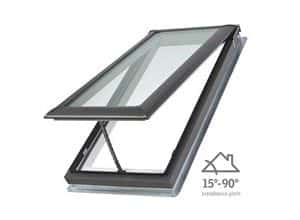
Ventilating (openable) skylights let you release hot air and bring in a fresh breeze, which makes them especially useful in bathrooms, kitchens, and laundries where moisture and stuffiness can build up.
Options can be:
- Manual opening Skylights can be reached by hand or rod.
- Electrical require an electrician to supply a power outlet.
- Solar using the sun to power the opening and closing.
Some openable options are manual, while others are electric or solar-powered, opening and closing at the touch of a button or in the event of rain.
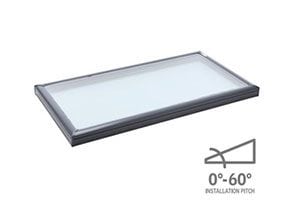
Fixed skylights bring natural light into your home without the need for opening mechanisms. They are a practical, low-maintenance choice for living areas, hallways and bedrooms where ventilation is not required.
Also known as conventional skylights, fixed skylights generally cost less than opening models because the hardware is simpler. Installation costs are usually similar, as fitting the skylight into the roof still requires much of the same work.
Why pay for extra features you may not need? Where ventilation is not essential, a fixed skylight can provide an effective and affordable lighting solution.
#Tip: Choose a fixed skylight where you only need daylight and want the lower-cost option. Choose a solar-opening skylight where ventilation matters, especially in kitchens, bathrooms, rooms that trap heat, or areas with high ceilings.